

TL;DR
The outcome:
Pivoted from B2C to B2B2C model after customer discovery revealed sustainability issues
Interviewed 20+ users and venue owners to validate problem space
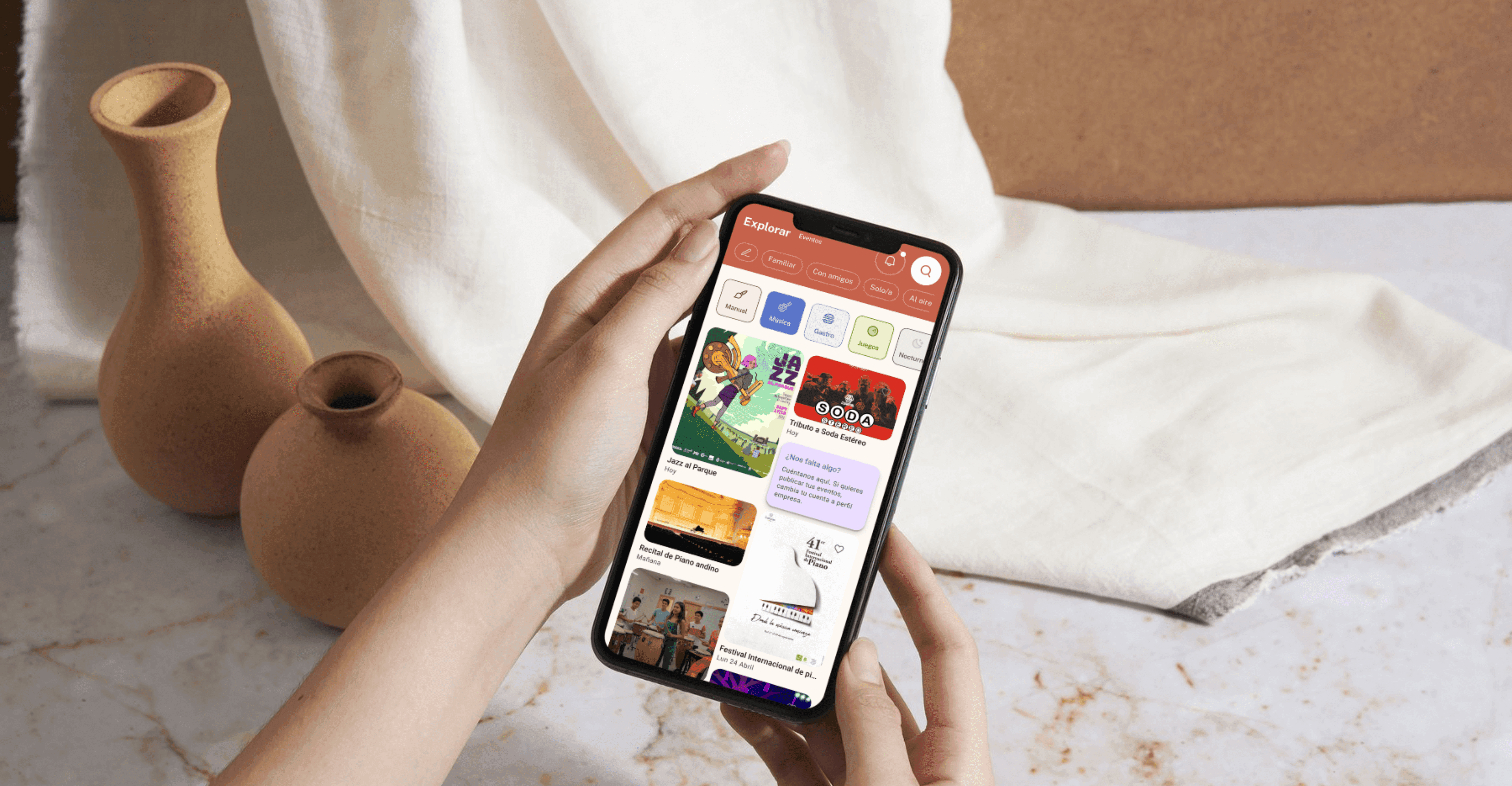
Designed centralized platform to replace fragmented discovery (Instagram saves, TikTok, endless scrolling)
Currently in research phase—validating with real users before building
What went wrong: Assumed newsletter would be primary acquisition channel—90% of interviewed users preferred push notifications. Realized manual content curation was unsustainable; needed venues and community to contribute. Thought I'd contrast with influencer content, but learned I should leverage existing communities instead.
What I learned:
B2C apps need a business model beyond user attention—pivoted to B2B2C
Manual operations don't scale—design for community-generated content from start
Don't fight existing behaviors (influencers)—design around them
Customer discovery before building saves months of wasted work
Main challenge
Context:
People browse endless Instagram reels, TikTok videos, and save hundreds of posts about things to do—but rarely follow through. Discovery is fragmented across platforms, saved content gets lost, and making actual plans requires too much friction.
My hypothesis:
A centralized platform that turns passive browsing into actionable plans would change behavior from "saving for later" to "booking now"—reducing decision fatigue and increasing real-world connections.
The constraints that shaped everything:
No funding yet—validating before building
Need dual-sided value (users AND venues/organizers)
Competing with established platforms (Instagram, Eventbrite)
Must solve chicken-egg problem: content needs venues, venues need users
Operating solo—research, design, strategy all on me

Phase 1: Customer discovery (current) Phase 2: Business model pivot Phase 3: Prototype & test (next)
Key decisions:
Started with research, not design—learned what to build first
Chose B2B2C over pure B2C for revenue sustainability
Designed for community content, not manual curation
Leveraged AI for documentation and strategic pivots
Difficulties:
Biggest risk is building something nobody wants. That's why I'm validating heavily before designing. Current challenge: balancing user needs (simple discovery) with business needs (venue management tools) in one coherent experience.
What went wrong?
Tested with early waitlist—engagement was low. Users want in-app notifications, not another email.
About business models:
User attention alone doesn't pay bills. B2B2C gives both sides value: users get free discovery, venues get tools they'd pay for. This validated why Instagram/TikTok work—they monetize attention with ads. I needed a different model.
About research:
Customer discovery is saving me months. Every wrong assumption caught now = features I won't waste time building. The best design is the one informed by real user problems, not my assumptions.
About operations:
Don't design systems that require me to manually update content. Design for scale from day one: community and venue contributions, not editorial curation.
For next time:
Test distribution channels before committing (newsletter assumption cost me time)
Design the full ecosystem (users + venues + content) from start, not user-only
Embrace existing behaviors (influencer content) instead of fighting them
Document everything—AI helps synthesize research into strategic pivots


